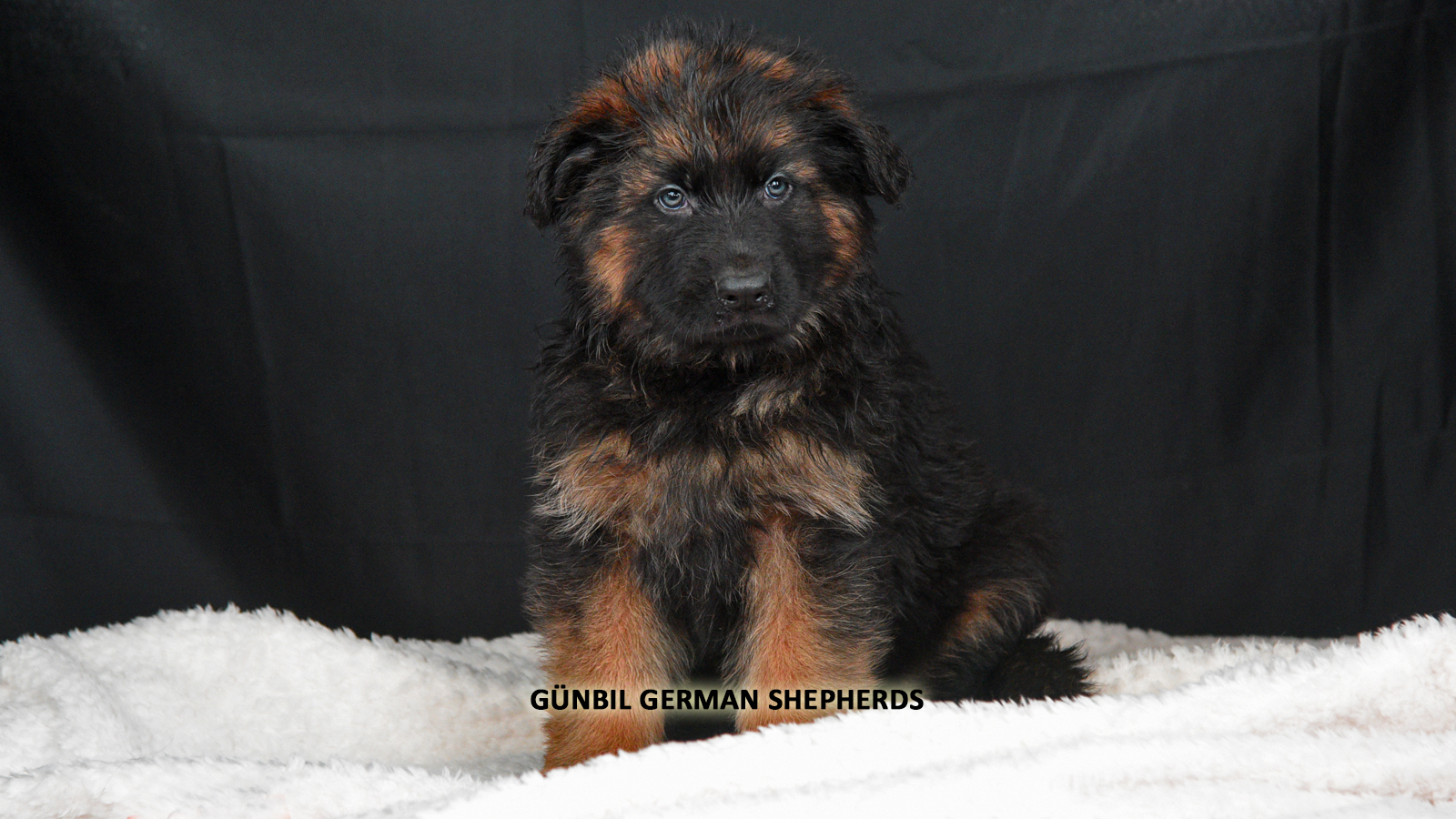
Our temperament assessment, in brief
This puppy temperament assessment helps families understand confidence, drive, sensitivity, and behavior patterns in German Shepherd puppies.
We assess each puppy from birth through 10 weeks to understand natural tendencies and help match each puppy with the right family and lifestyle.
This assessment is not a pass/fail test. It reflects behavior at this stage of development, while training, socialization, health, and environment shape the adult dog.
What we evaluate in German Shepherd puppies
We observe your puppy in short, gentle sessions across multiple days and settings. We look at:
- Confidence & curiosity: approaches new things vs. hesitates
- Social engagement: seeks people and contact vs. more independent
- Resilience: recovers quickly after mild surprises or novelty
- Sensitivity: response to handling, sound, and environment
- Engagement & focus: interest in play/toys/food and ability to settle
- Energy level: calm / medium / high
- Early impulse control: age-appropriate mouthiness and self-control
How the assessment is done (puppy-safe)
Sessions are kept short and positive. Depending on age and readiness, we may introduce:
- Gentle handling (paws, ears, mouth, light restraint)
- Follow/engagement with a person
- Response to a mild novel sound at a distance
- Interest in a toy or food reward
- Exposure to a new surface/object (mat, wobble board, cone)
- Ability to settle after play/excitement
We always prioritize each puppy’s comfort and confidence. If a puppy shows stress, we adjust and keep the experience positive.
Temperament categories we use
These categories describe common patterns we observe at this age. Puppies can shift as they mature. We use these categories as a practical way to help families understand what to expect.
Alpha (Very Confident / High Drive)
- Traits: bold, persistent, highly confident, strong drive, may push boundaries.
- Best match: experienced handler, structured home, active lifestyle, working/sport goals.
- Notes: benefits from clear rules, impulse control, and an early “off switch” (settle).
Alpha-Beta (Confident & Cooperative)
- Traits: confident, social, eager to learn, engages strongly but responds well to leadership.
- Best match: active families or working homes wanting a versatile companion.
- Notes: thrives with consistent training and enrichment.
High Beta (Balanced / Social)
- Traits: friendly, adaptable, playful, medium-to-high energy, good recovery from novelty.
- Best match: most family homes; good for first-time owners committed to training.
- Notes: responds well to positive structure and routine.
Beta (Easygoing / Moderate Drive)
- Traits: calmer, affectionate, slightly cautious at first, prefers stability and guidance.
- Best match: calmer households, companionship-focused homes, moderate activity level.
- Notes: confidence-building and gentle exposure help them thrive.
Beta-Omega (Very Gentle / Low Drive / Support-Oriented)
- Traits: extremely gentle, sensitive, avoids conflict, slower to explore independently, very affectionate.
- Best match: quiet homes, patient owners, companion-focused families.
- Notes: thrives with calm routines, reassurance, and positive experiences.
Omega (Most Sensitive / Reserved)
- Traits: very soft-natured, highly sensitive, reserved, easily overwhelmed by chaos.
- Best match: low-stress home, patient owners, predictable daily rhythm.
- Notes: confidence-building is key; avoid harsh corrections or chaotic environments.
Questions to help us match you with the right puppy
- How active is your household (daily routine, visitors, kids, other pets)?
- Is this your first German Shepherd or have you trained working breeds before?
- What’s your goal: family companion, personal protection, sport, service work, or a mix?
- How much time can you commit to training and socialization weekly?
- Do you prefer a confident, driven puppy—or a calmer, gentler temperament?
When we know your lifestyle and goals, we can recommend the best match from the litter—not just the “boldest” puppy.
What this means for you
- We use temperament to guide the match—not to “rank” puppies.
- A confident puppy still needs structure, training, and boundaries.
- A sensitive puppy can become very stable with calm leadership and positive socialization.
- Consistency matters more than labels.
- We will always give you honest guidance based on what we observe.
Our promise: We’ll guide you toward the puppy that best fits your experience level, household energy, and goals.
Want help choosing the right puppy?
Tell us your experience level and goals, and we’ll guide you to the best match from the litter.