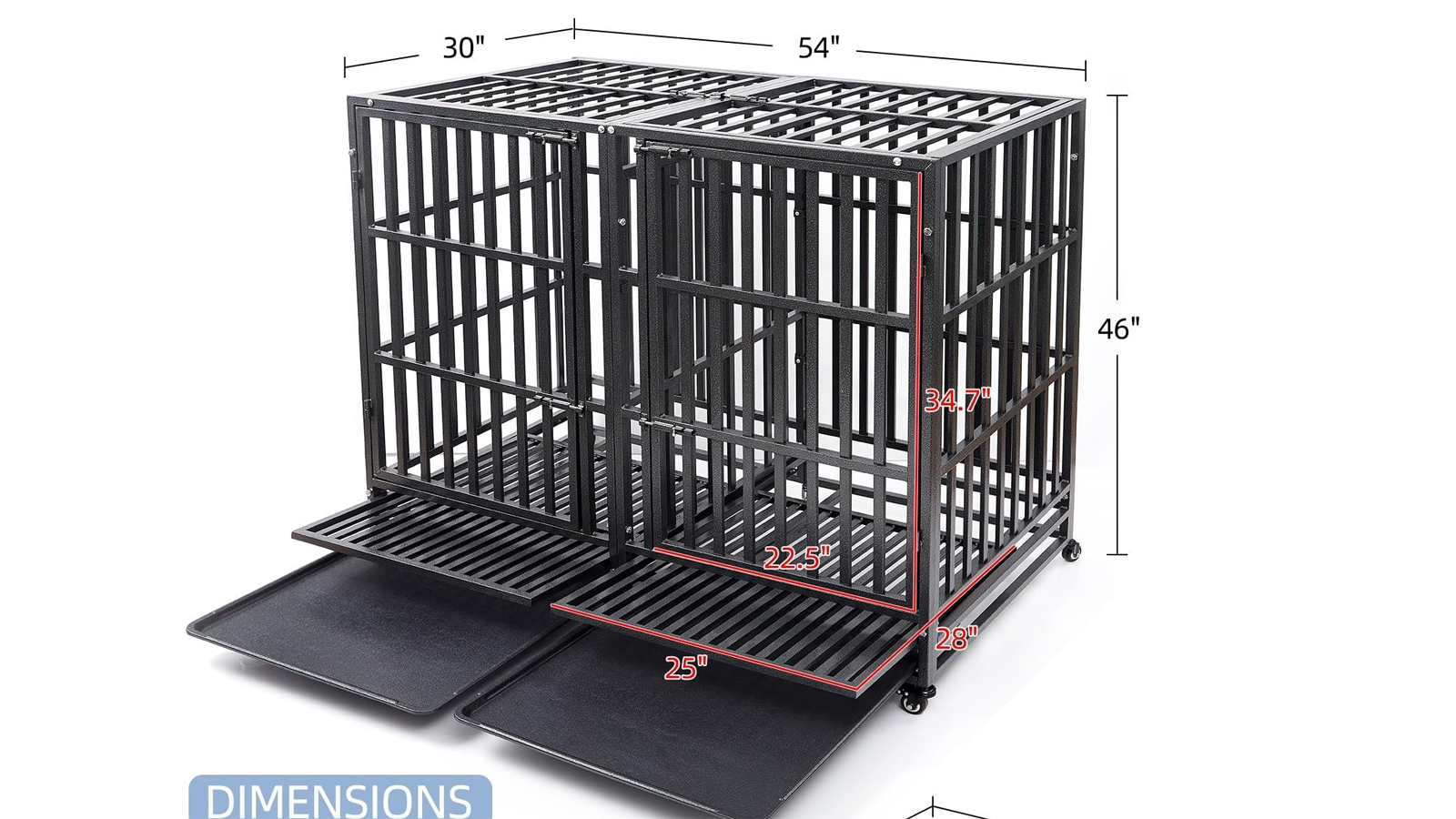
A crate is more than a box with bars—it is your German Shepherd puppy’s bedroom, safe zone, and resting place. The right crate helps with housebreaking, protects your home when you cannot supervise, and gives your puppy a secure place to relax. The wrong crate can feel cramped, unsafe, or easy to escape from.
At Gunbil German Shepherds, we recommend a heavy-duty metal crate for your home and never smaller than 48 inches in length, with 54 inches ideal for most German Shepherds. Bigger is better, as long as the crate is set up correctly.
Why crate type matters for German Shepherds
German Shepherds are athletic, intelligent, and powerful dogs. Many puppies quickly learn how to test latches, bend weak wire, or chew plastic. A flimsy crate might work for a small, calm breed, but it is not a good match for a working-bred German Shepherd.
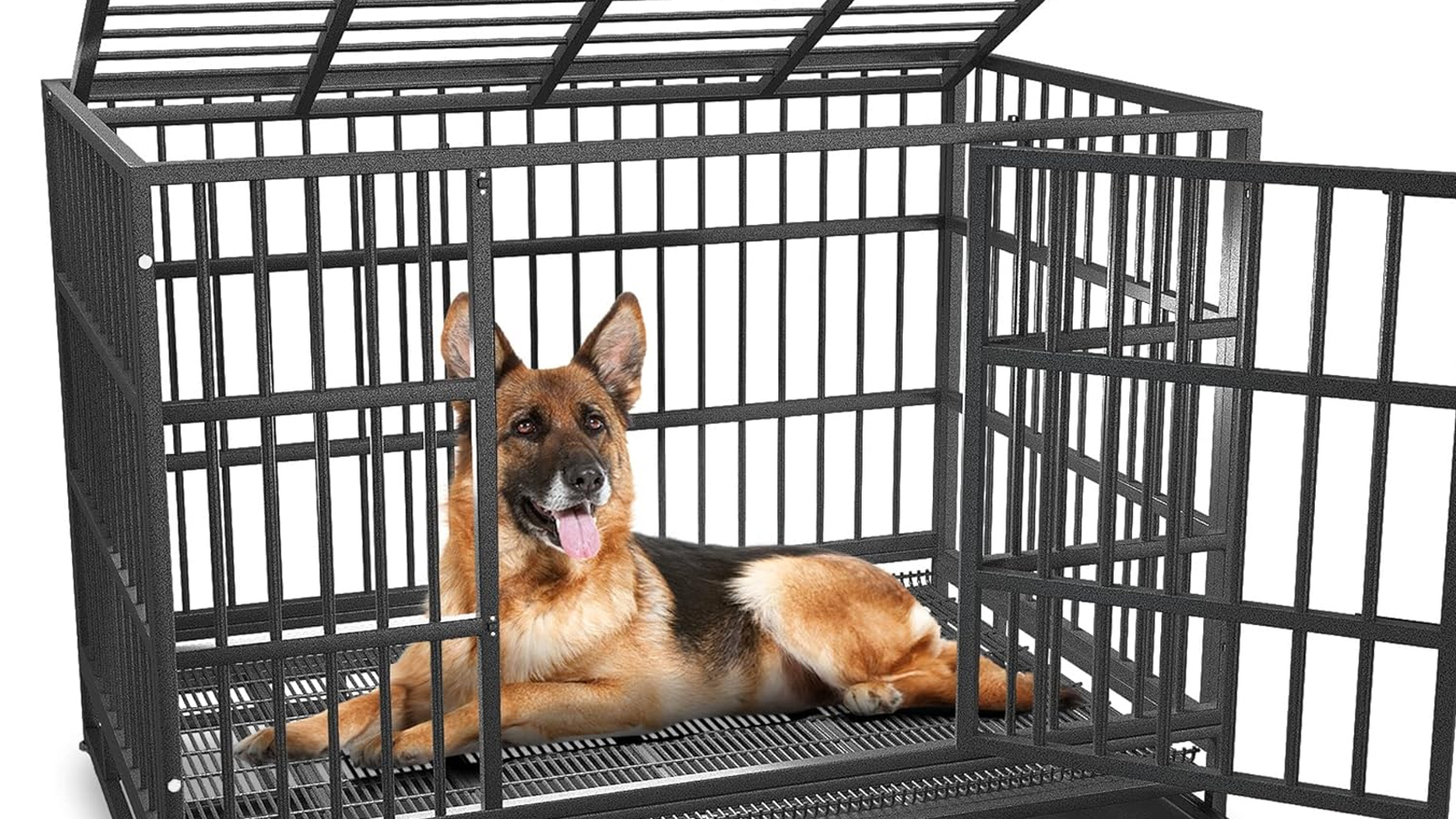
A good crate for a German Shepherd puppy should:
- Be constructed from strong metal bars, not thin wire or soft plastic
- Have secure, escape-resistant latches that cannot be bumped open
- Provide excellent ventilation and visibility
- Include a solid, easy-to-clean tray underneath the floor grid
- Be large enough for the dog to stand, stretch, and turn comfortably, even as an adult
Recommended crate size: why 48–54 inches works best
Many pet-store crates are sized for smaller breeds and can be too short or narrow for a German Shepherd—especially once your puppy grows. Instead of buying a tiny “puppy crate” and replacing it later, start with an adult-size crate of at least 48 inches, and ideally 54 inches if you have space.
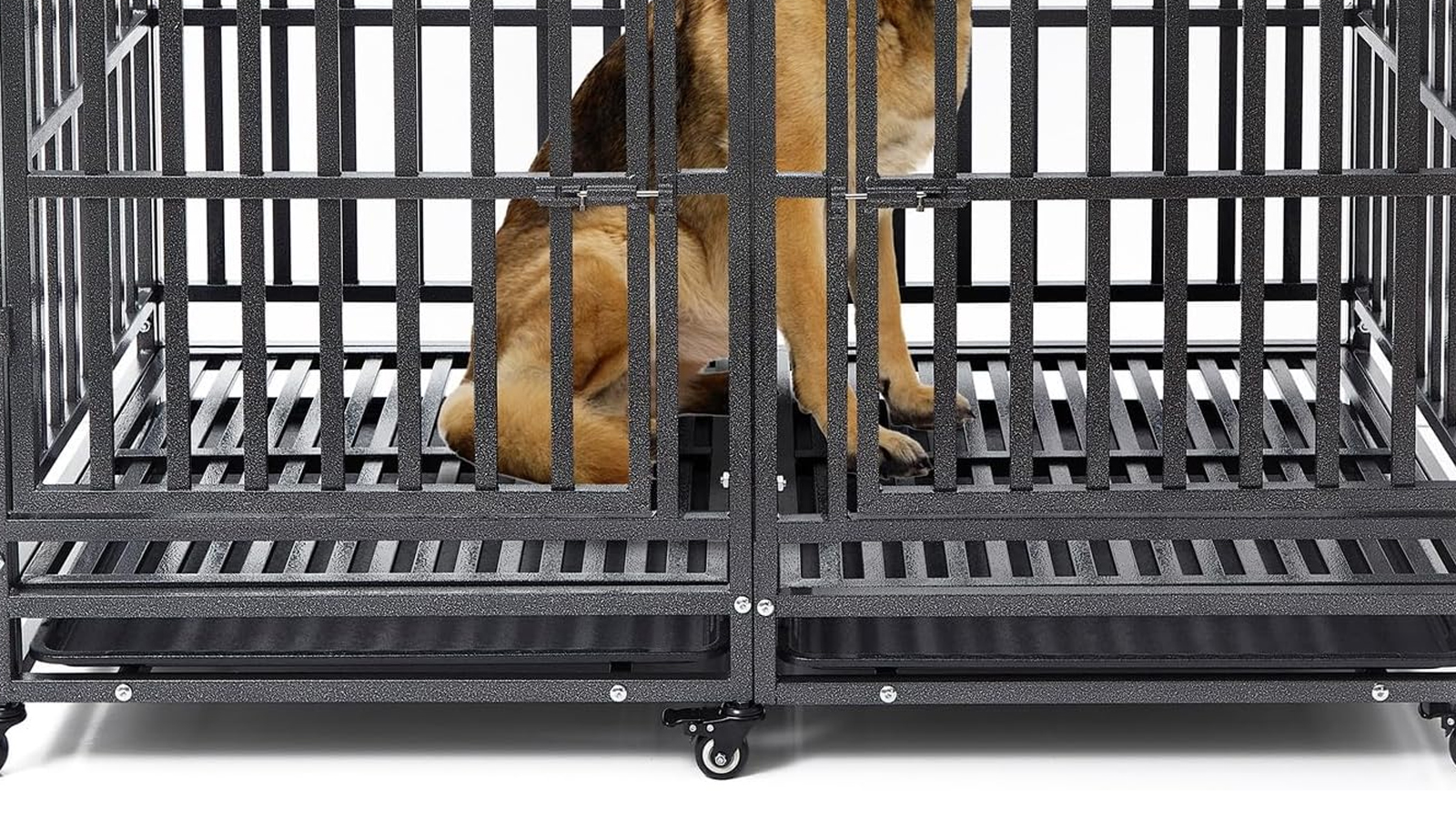
A properly sized crate allows your puppy to:
- Lie flat on their side without touching both ends of the crate
- Turn around easily without crouching or twisting
- Sit and stand with a comfortable margin above their head
- Grow into the space as an adult without needing a new crate
If the crate feels too open for a young puppy, you can temporarily use a divider panel or add a covered “den” area at one end. You get the benefits of a full-size crate without making the space feel overwhelming early on.
Heavy-duty metal crates vs. plastic travel crates
Plastic travel crates have their place—for airline use or short transport—but for daily life in the home, a heavy-duty metal crate is usually the better choice for a German Shepherd.
Metal home crates offer:
- Better airflow and cooler resting environment
- More visibility, so your puppy can see the family and feel included
- Stronger structure that resists chewing and bending
- Often a top-opening or double-door design, making cleaning and handling easier
You can still use a plastic crate for travel, vet visits, or short trips, but for everyday use in the home, we prefer the kind of strong metal crate shown in the example above.
Setting up the crate in your home
Placement matters. Your crate should be in a calm, safe spot where your puppy can relax but still feel like part of the family.
- Choose a location away from direct drafts, heaters, and full sun
- Avoid tight hallways or busy doorways where people constantly step over the puppy
- Use a non-slip mat or rug under the crate to prevent sliding and protect your floors
- Keep electrical cords, houseplants, and chewable items out of reach from the crate
For a full room-by-room checklist of hazards and how to puppy-proof your living spaces, see our Home Safety for Puppies FYI page.
Making the crate comfortable (without overdoing it)
New puppy owners often try to make the crate look like a human bed—with pillows, thick blankets, and toys everywhere. For a German Shepherd puppy, less is usually better, especially during housebreaking.
- Use a simple, washable crate mat or thin bed that covers most of the floor
- Avoid overstuffed beds if your puppy likes to chew or shred fabric
- Offer one or two safe chew items (no rawhide, no small pieces that can be swallowed)
- Cover part of the crate with a breathable blanket if your puppy relaxes better with a “den” feeling
Common crate mistakes to avoid
- Choosing a crate that is too small “because they are just a puppy right now”
- Using flimsy wire or plastic crates that bend, rattle, or feel unstable
- Leaving collars with tags on in the crate (risk of snagging)
- Using the crate as punishment instead of a safe resting space
- Allowing children to climb inside or bother the puppy while crated
When the crate is sized correctly and introduced calmly, most German Shepherd puppies quickly see it as their safe spot—not a jail cell.
Frequently Asked Questions
What size crate should I use for my German Shepherd puppy?
For most Gunbil puppies, we recommend a crate that is at least 48 inches long, with 54 inches ideal whenever space allows. This lets your puppy stretch out, turn easily, and grow into the crate as an adult.
Is a heavy-duty metal crate better than a plastic crate?
Yes, for everyday home use with a German Shepherd, a heavy-duty metal crate is usually the best option. It provides stronger structure, better ventilation, and more visibility, and it is harder for a clever, powerful puppy to damage.
Will a large 48–54 inch crate feel too big or unsafe?
Not if you set it up correctly. Use a divider to create a cozier sleeping zone while your puppy is small and gradually open more space as they grow.
Where should I place the crate in my home?
Place the crate in a quiet corner of your main living area where your puppy can see you and feel included but is not in the middle of traffic. Avoid loud speakers, direct sun, cold drafts, and busy doorways.
Questions? We’re here to help. Call (719) 220-2222 or contact us.