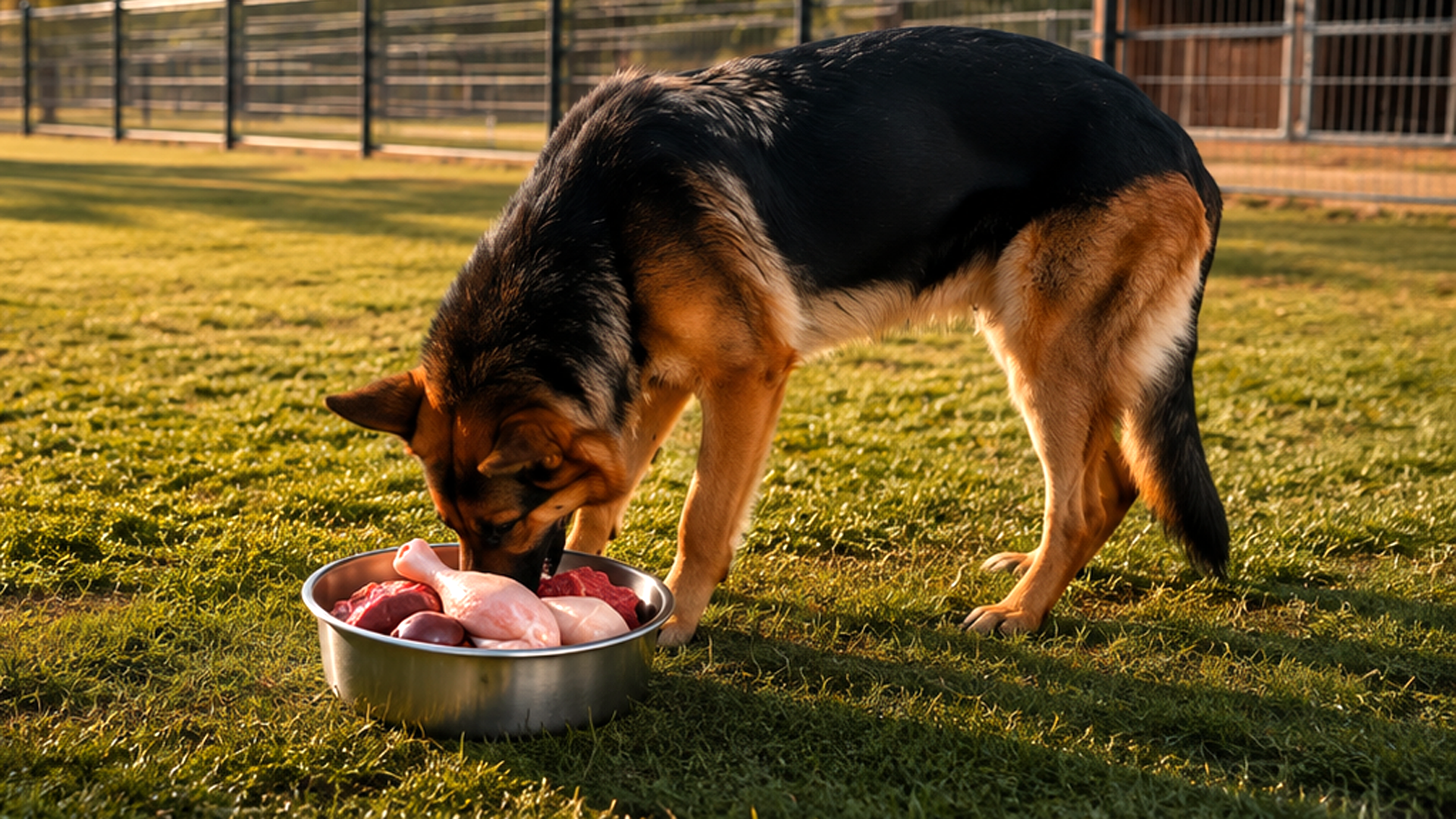
This article explains Gunbil’s feeding practices for pregnant and nursing breeding females. It is not a raw-feeding program for Gunbil puppies.
For more than 27 years, Gunbil German Shepherds has refined its nutrition program through hands-on experience raising, breeding, whelping, feeding, training, and evaluating German Shepherd Dogs. Our breeding program is built on authentic German SV bloodlines imported directly from Germany.
The Gunbil feeding philosophy
We do not believe every German Shepherd should receive exactly the same diet at every stage of life. A pregnant female, a nursing mother, a growing puppy, and a mature adult have different nutritional demands.
One area where Gunbil follows long-established German breeding practices is the nutritional management of our pregnant and nursing females. Many respected German Shepherd breeders in Germany have used carefully planned raw-feeding programs, including raw meaty chicken bones, as part of their breeding-female nutrition for many years.
Why we feed raw during pregnancy
During pregnancy, a breeding female must maintain her own body condition while supporting the growth and development of her puppies. Nutritional demands become especially significant during the later portion of pregnancy as fetal growth accelerates.
Gunbil uses a carefully managed raw program for our pregnant females to provide concentrated animal protein, fat, calories, moisture, and calcium-containing raw meaty bones as components of the complete ration.
Animal protein
Quality animal protein supplies amino acids needed to maintain the female’s condition and support the development of her puppies.
Energy and calories
Pregnancy and lactation increase energy needs. Appropriate animal fats and calorie-dense foods help support body condition and milk production.
Raw meaty bones
Raw meaty chicken bones may contribute calcium and phosphorus when used in carefully calculated amounts as part of a complete, balanced ration.
Palatability
Fresh foods can help maintain interest in meals when a pregnant female’s appetite or available stomach space changes late in pregnancy.
Nutrition prior to whelping
During the final weeks before whelping, the growing litter occupies more abdominal space and the female may be more comfortable eating several smaller meals rather than one or two very large meals.
Our priorities prior to whelping include:
- Maintaining healthy body condition without excessive weight gain
- Providing sufficient quality protein and calories
- Keeping fresh water available at all times
- Using smaller, more frequent meals when needed
- Monitoring appetite, stool quality, hydration, and comfort
- Preparing the female for labor and the demands of nursing
Nutrition during lactation
Milk production can place greater nutritional demands on a female than pregnancy itself. Her calorie, protein, fat, water, and overall nutrient needs may rise substantially depending on litter size and milk production.
Gunbil continues the carefully balanced feeding program during nursing to help the mother maintain condition, produce milk, recover from whelping, and support the growth of her litter.
Raw meaty chicken bones used in breeding-female diets
Raw meaty chicken items commonly used by experienced raw feeders may include chicken backs, necks, frames, wings, and appropriate chicken portions. The selection and amount must fit the individual dog and the balance of the complete ration.
Chicken liver
Chicken liver is nutrient-dense and supplies vitamin A, iron, copper, and several B vitamins. These nutrients contribute to normal blood formation, energy metabolism, immune function, reproduction, skin, and coat condition.
Because liver is concentrated, more is not better. It is used in moderation as one component of a balanced feeding program rather than as a complete meal by itself.
Chicken gizzards
Chicken gizzards provide animal protein and a firm chewing texture. They can add variety to a carefully planned diet and encourage chewing and jaw use.
Gizzards are treated as a food ingredient—not as a substitute for the nutritional balance of the total diet.
Raw handling and food safety
Raw animal products can contain harmful bacteria. Safe sourcing, refrigeration, sanitation, handwashing, surface cleaning, and careful handling are essential. Bowls and preparation areas should be cleaned immediately after meals.
Households with very young children, elderly individuals, pregnant people, or immunocompromised individuals should discuss raw-food handling risks with their veterinarian and medical professional.
Gunbil feeding programs by life stage
| Life stage | Gunbil feeding approach |
|---|---|
| Pregnant females | Carefully balanced raw-feeding program designed for the individual female and her stage of pregnancy. |
| Nursing females | Increased nutritional support for body condition, recovery, milk production, and litter demands. |
| Gunbil puppies | Fromm Puppy Gold only. No raw diet, raw bones, or routine nutritional supplements. |
| Dogs 9 months and older | Owners who choose raw may begin a gradual transition to a complete and balanced program. |
DO NOT FEED YOUR GUNBIL PUPPY A RAW DIET.
Why Gunbil puppies receive Fromm Puppy Gold
Gunbil puppies are not raised on a raw diet. From weaning until they leave for their new homes, they receive Fromm Puppy Gold.
We use a consistent commercial puppy diet because it supplies complete and balanced nutrition during a critical growth period and makes the puppy’s transition to the new home more predictable.
We do not routinely add raw food, raw bones, organ meat, calcium, or other nutritional supplements to the puppies’ diet.
When may an owner begin feeding raw?
If a family chooses to feed raw later, Gunbil generally recommends waiting until the German Shepherd is at least nine months old before introducing raw foods or raw meaty chicken bones.
At that stage, owners who choose raw should use a properly formulated, complete, balanced feeding program and transition gradually rather than changing the entire diet at once.
The Gunbil 20-day transition schedule
Gunbil recommends increasing the raw portion by approximately 10% every two days. The full transition may take up to 20 days.
| Days | Existing diet | Raw diet |
|---|---|---|
| 1–2 | 90% | 10% |
| 3–4 | 80% | 20% |
| 5–6 | 70% | 30% |
| 7–8 | 60% | 40% |
| 9–10 | 50% | 50% |
| 11–12 | 40% | 60% |
| 13–14 | 30% | 70% |
| 15–16 | 20% | 80% |
| 17–18 | 10% | 90% |
| 19–20 | 0% | 100% |
Monitor appetite, stool quality, body condition, energy, vomiting, itching, and overall comfort throughout the transition. Pause the increase and consult a veterinarian if the dog becomes unwell.
Important nutritional balance
Meat alone is not a complete diet. A raw-feeding program must be formulated to provide appropriate nutrients and proportions for the individual dog. Excessive or deficient calcium, phosphorus, vitamins, calories, or other nutrients can create serious health problems.
Pregnancy and lactation are medically and nutritionally demanding. Owners should work with their veterinarian or a qualified veterinary nutrition professional before making major dietary changes for a pregnant or nursing dog.
Frequently asked questions
Does Gunbil feed puppies raw food?
No. Gunbil puppies are fed Fromm Puppy Gold. They are not raised on raw food, raw bones, or routine nutritional supplements.
Is this a raw-feeding guide for puppies?
No. The primary raw-feeding practices described here apply to Gunbil’s pregnant and nursing breeding females.
Why does Gunbil feed breeding females differently?
Pregnancy and milk production create nutritional demands that differ significantly from those of a growing puppy or an ordinary adult maintenance dog.
At what age may I begin a raw transition?
Gunbil generally recommends waiting until the German Shepherd is at least nine months old and then transitioning gradually.
How quickly should the transition occur?
Increase raw food by approximately 10% every two days, allowing as many as 20 days for the complete transition.
Can I feed cooked chicken bones?
No. Cooked chicken bones can become brittle and may splinter.
Should I add calcium supplements?
Do not add calcium or other supplements without professional guidance. Nutritional excesses can be harmful, especially during growth, pregnancy, and lactation.
The Gunbil philosophy
Gunbil’s feeding program is not based on internet trends or a one-size-fits-all philosophy. It reflects more than 27 years of hands-on experience with German Shepherd Dogs and many of the traditional feeding practices used by experienced breeders in Germany.
Our pregnant and nursing females receive nutrition suited to the demands of reproduction. Our puppies receive Fromm Puppy Gold with no raw food and no routine nutritional supplements. Mature dogs may transition gradually after nine months when owners choose a properly balanced raw program.
Every feeding decision should support the health, soundness, and long-term well-being of the individual German Shepherd Dog.
Questions about your Gunbil puppy’s feeding program? Call (719) 220-2222 or contact Gunbil German Shepherds.